Timothée Chalamet: looks-maxxing breakdown
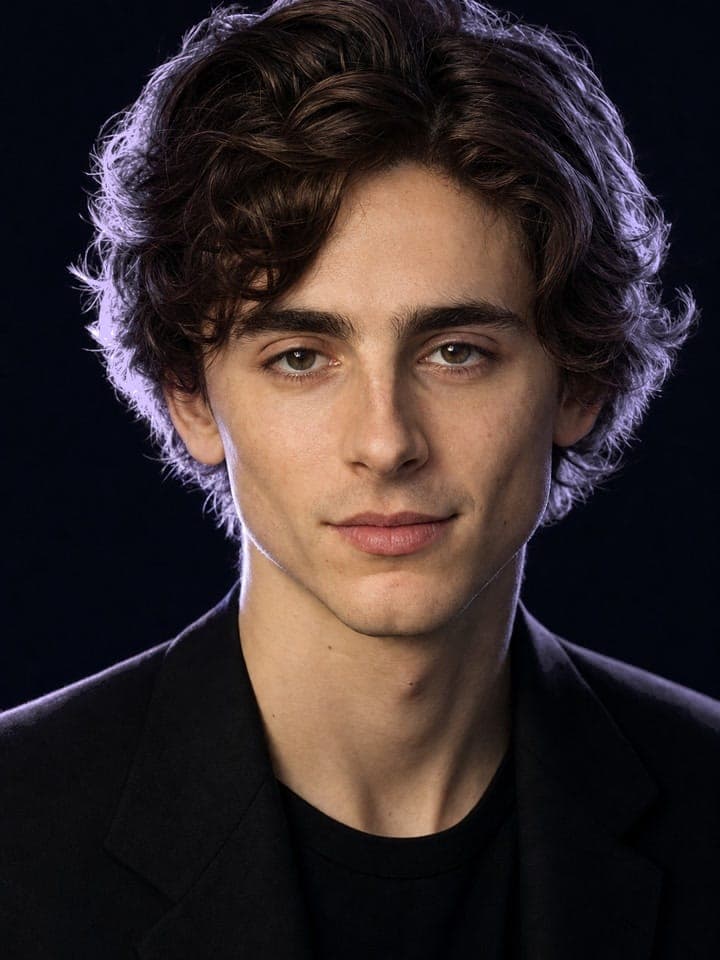
Elite face rating of Timothée Chalamet’s angular romantic structure — high zygomas, tapered mandible, elongated midface cues, crown volume, and 45° key-light craft for big-screen romantic leading-man looks-maxxing.
 imaxlooks
Big-screen thesis: angular romantic leading man
Timothée Chalamet’s face is a masterclass in high-zygoma romantic angularity. On a large screen he does not read as “pretty soft” or “square blockbuster” — he reads as sculptural midface + tapered lower third, the kind of silhouette DPs love for three-quarter close-ups because cheek hollows catch a rim and the jaw never fights the collar.
Bio cue for study: *angular romantic leading man known for high cheekbones and sculptural midface.*
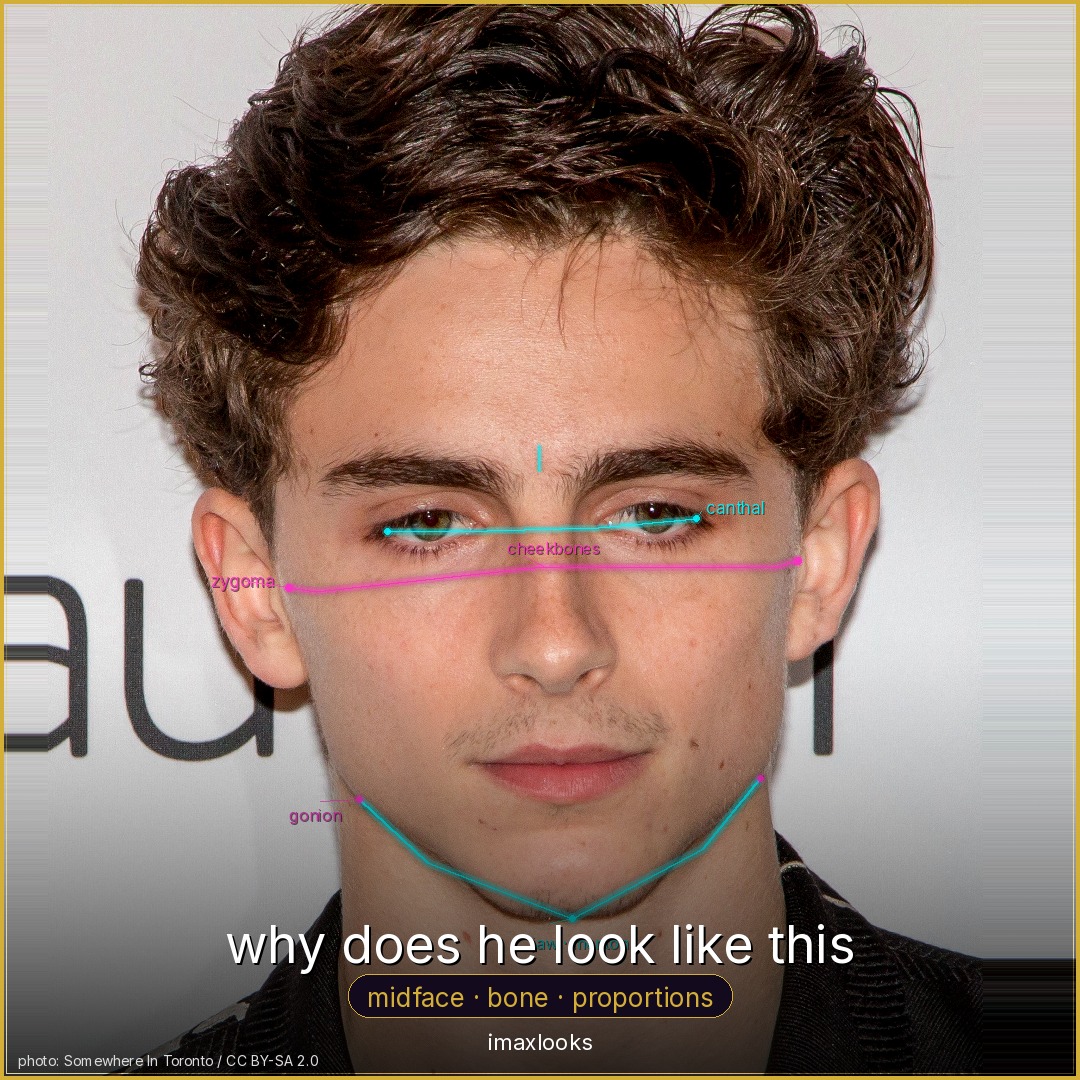
Editorial study scores (not medical ratings):
- Bone structure — 9.2/10 — Pronounced zygomatic arches with a tapered mandible.
- Hair — 8.5/10 — Crown volume elongates the face and frames the temples.
- Lighting — 8.8/10 — 45° key light deepens cheek hollows without flattening eyes.
---
Bone structure & mandible
Zygomatic projection
Chalamet’s zygomatic arches sit forward and high relative to the oral commissure. In looks-maxxing language that means the cheekbone plane creates a visible “shelf” under hard side light. On IMAX-scale faces, that shelf is what separates “flat phone selfie” from “cinema bone.”
Study drill: pause a three-quarter still. Trace from tragion (ear) forward along the cheek. If the highlight breaks early and a soft hollow forms before the mouth corner, you are seeing zygomatic dominance — his signature.
Tapered mandible vs square hero jaw
Unlike square-jaw archetypes (Cavill, classic Elba), Chalamet’s mandible tapers. The gonial angle is present but not brutally squared; chin projection is refined rather than buttressed. That taper + high cheeks = the romantic inverted-triangle cue that fashion editorials and art-house cinema both reward.
Looks-maxxing implication: if your own jaw is softer, studying Chalamet teaches upper-face and midface emphasis (hair height, cheek light, open collars) rather than forcing a “square jaw” fantasy that lighting cannot invent.
Temporal width & forehead
Temples are relatively narrow versus cheek width — another reason crown volume works. A narrower temporal region lets hair mass act like architectural “columns” framing the orbit.
---
Midface analysis
Sculptural midface length
The midface (roughly subnasale to soft-tissue gonion / cheek mass region in casual study terms; more precisely the middle facial third) reads long and planar rather than round. Soft-tissue coverage is lean enough that bone planes stay readable; there is enough cheek mass to avoid a gaunt “collapse” under beauty light.
Infraorbital & under-eye
Deep-ish orbital framing with visible lid plane keeps eyes from looking “pasted on.” Under soft fill he goes luminous; under hard key the infraorbital rim can shadow — classic angular romantic behavior. Makeup/grooming teams often keep under-eye finish clean so the bone story stays primary.
Nasal & philtrum balance
A refined nasal dorsum and proportional philtrum keep the midface from looking crowded. Big-screen romantic leads often share this: nothing in the center third “shouts” louder than the cheek planes.
---
Proportions & elite face ratios
Vertical thirds
Upper third (hairline to brow) is often optically lengthened by tousled crown height. Middle third carries the cheek sculpture. Lower third is tapered — mouth and chin do not dominate unless he smiles wide.
Horizontal fifths & eye spacing
Eye spacing reads harmonious for camera — neither extremely wide nor pinched. Outer canthi sit in a slight romantic lift that cooperates with soft arched brows (when groomed that way).
Facial taper (bizygomatic → bigonial)
Bizygomatic width > bigonial width is the core elite romantic taper. That ratio is why three-quarter shots look expensive: the face naturally points toward the chin like a soft arrow.
---
Styling & grooming cues
Hair as face-shape engineering (8.5)
Crown volume is not vanity — it is vertical proportion control. Height at the crown:
- Optically lengthens a face that could otherwise read midface-heavy.
- Softens temporal narrowness.
- Creates a dark frame that makes cheek highlights pop under cyan/magenta stage light (very Miami Vice grid energy).
Short, flat crops on this bone set would *increase* relative midface width and reduce the romantic silhouette. When he wears tighter cuts, the look shifts more “European editorial severe” than “dreamy lead.”
Neckline & wardrobe
Open shirts, soft knits, and uncluttered necklines keep the tapered jaw visible. High turtlenecks + flat hair would mute the whole thesis. Thin chains or no jewelry keep attention on planes, not hardware.
Skin finish
Matte-to-satin on cheeks, controlled T-zone — enough sheen on the zygoma to prove bone, not enough oil to erase hollows. Looks-maxxing takeaway: highlight the shelf, matte the hollow.
---
Lighting & camera craft (8.8)
The educational gold standard for this face: ~45° key with modest fill.
- Key from camera-left or right at 45° azimuth, slightly above eye line → hollows deepen, eyes stay alive.
- Hard source = fashion bone porn; large softbox = romantic glow without deleting structure if you keep a kiss of side contrast.
- Avoid flat ring-light frontals if the goal is elite bone reading — they erase the zygomatic story.
On a Miami Vice–coded set (neon practicals, wet asphalt reflections), his planes take colored rim beautifully because there is geometry for the color to land on.
---
Concrete takeaways (study, not surgery)
- Map the taper — Draw bizygomatic vs bigonial on a still; learn inverted-triangle romantic vs square-hero templates.
- Hair height is a lever — Crown volume changes perceived thirds more than most beginners expect.
- Light the shelf — Practice 45° key on any angular face; watch hollows appear without crushing orbits.
- Separate genetics from craft — You cannot bolt on his zygomas; you *can* study neckline, hair mass, and key angle.
- Compare archetypes — Stack Chalamet vs Cavill stills: taper vs square gonial — same “leading man,” opposite lower-third strategy.
Related look card
Study the scored features on /look/timothee-chalamet-cheekbones.
Image credit
Portrait sourced from Wikimedia Commons with license attribution stored in media assets. Educational use only.
---
*Educational analysis only — not medical, surgical, or dermatological advice. Scores are editorial study ratings for camera craft and facial aesthetics literacy.*
Related look features
Bone structure
9.2/10Pronounced zygomatic arches with a tapered mandible.
Hair
8.5/10Crown volume elongates the face and frames the temples.
Lighting
8.8/1045° key light deepens cheek hollows without flattening eyes.
Source: https://commons.wikimedia.org/
More looks news
- imaxlooks
Timothée Chalamet’s understated CinemaCon layering vs Zendaya’s couture
Chalamet’s sand-toned jacket, dark top, and relaxed trousers at CinemaCon show how soft desert neutrals and relaxed drape can still read ‘leading man’ next to high-concept couture.
- imaxlooks
Timothée Chalamet suits up in caramel Givenchy for Marty Supreme Paris
At the Paris premiere, Chalamet swapped neon method-dressing for a slouchy caramel-brown Givenchy double-breasted suit — wide legs, white shirt, leather strap watch.
 imaxlooks
Henry Golding: looks-maxxing breakdown
An educational breakdown of Henry Golding's warm Southeast Asian leading-man polish, soft smile, and cheekbone rails — for learning, not medical advice.