 imaxlooksAI headshot still · imaxlooks actor library
Landmark inspector
L cheek
Zygomatic highlight
Mandalorian → Last of Us peak · Warm Latino leading-man structure
Pedro Pascal
Warm medium-tan skin, salt-and-pepper framing, and charismatic soft-smile structure that made The Mandalorian and The Last of Us stills a mainstream Latino looks lab.
- Study score
- 92.6
- Signature
- Warmth + smile
- Era
- Mando / TLOU
Overall study score 92.6 · ~P97 among editorial demo callouts. Educational only — not clinical. 9 analysis stills loaded.
Neon face lab
Real photos · SVG overlays on the face
Wikimedia and archive stills with thirds, fifths, canthal tilt, fWHR, jaw, and midface-to-brow lines drawn on the face. Switch photos below — this is analysis, not a collage gallery.

archive · live overlay
Facial thirds21/37/41%
Relative height of upper / mid / lower thirds (hairline→brow→nose→chin).
Extra archive frames with different overlay defaults — unlock to scrub every still.
Actor · Mandalorian / Last of Us breakthrough
Who Pedro is — and why warm Latino leading-man structure became a looks lab
Pedro Pascal is a Chilean-American actor whose path runs from Game of Thrones’ Oberyn Martell into Narcos’ Javier Peña, Disney+’s The Mandalorian as Din Djarin, and HBO’s The Last of Us as Joel — a run that put warm medium-tan skin, salt-and-pepper framing, and charismatic soft-smile structure into mainstream Latino looks discourse.
Occupation context matters. He is not a runway-only model: fantasy-TV grit, cartel-drama daylight, helmet-era Mando close-ups, and Last of Us soft natural keys each teach different grammars. Separate costume armor, stubble eras, and graded HBO stills from bone that survives a frontal carpet without the franchise grade.
Cultural commentary: The Mandalorian and The Last of Us made “warm Latino leading dad / uncle energy” a mass meme category in English-language looks forums. Translate hype into cues — compact warm midface, soft-strong mandibular taper, zygomatic highlight rails, phenotype-true undertones, salt-and-pepper temple control — instead of gray-ash hollow cosplay that fights his midface density.
Oberyn vs Narcos vs Mando vs Joel press: flash carpets, dusty daylight, helmet shadow, and soft HBO keys change shadow depth; eye spacing, brow frame, and midface plane should mostly survive. If “definition” only appears under cyan/coral rim grades or heavy stubble edges, it was lighting and finish.
Hair eras are a control lever: short wavy salt-and-pepper billboards temples and jaw; softer longer crowns open mass and soften the gonial edge. Track one metric (zygoma specular or soft-smile lip read) across SDCC → Narcos → Mando → Last of Us → Cannes/SXSW cycles.
For Latina/Latino phenotype literacy: warm undertones, cyan/coral race accents on this page match the edition guide (#5ef0ff / #ff6b4a), keep specular on high planes, and do not over-chase magenta Miami Vice defaults or square-jaw contour trends that ignore his approachable taper and soft-smile finish.
Press & public stills
Pictures of the work — eras that taught the internet
Licensed Wikimedia Commons stills of Pascal’s public eras (not the uniform AI hero headshot). Use these to study costume vs bone, then flip back to the AI headshot for a controlled lighting baseline.

Gage Skidmore portrait cycle · Convention stills
Frontal energy — salt-and-pepper frame, soft smile, warm midface under event light.

SDCC 2014 cycle · Gage Skidmore
Earlier convention frontal — compare jaw taper and temple fifths to later gray eras.

SXSW 2025 solo press · Bea Phi
Last of Us–era carpet — phenotype-true warmth without helmet-grade crutches.

SXSW 2025 three-quarter · Bea Phi
Three-quarter for zygoma rail and soft-strong gonial corner under flash.
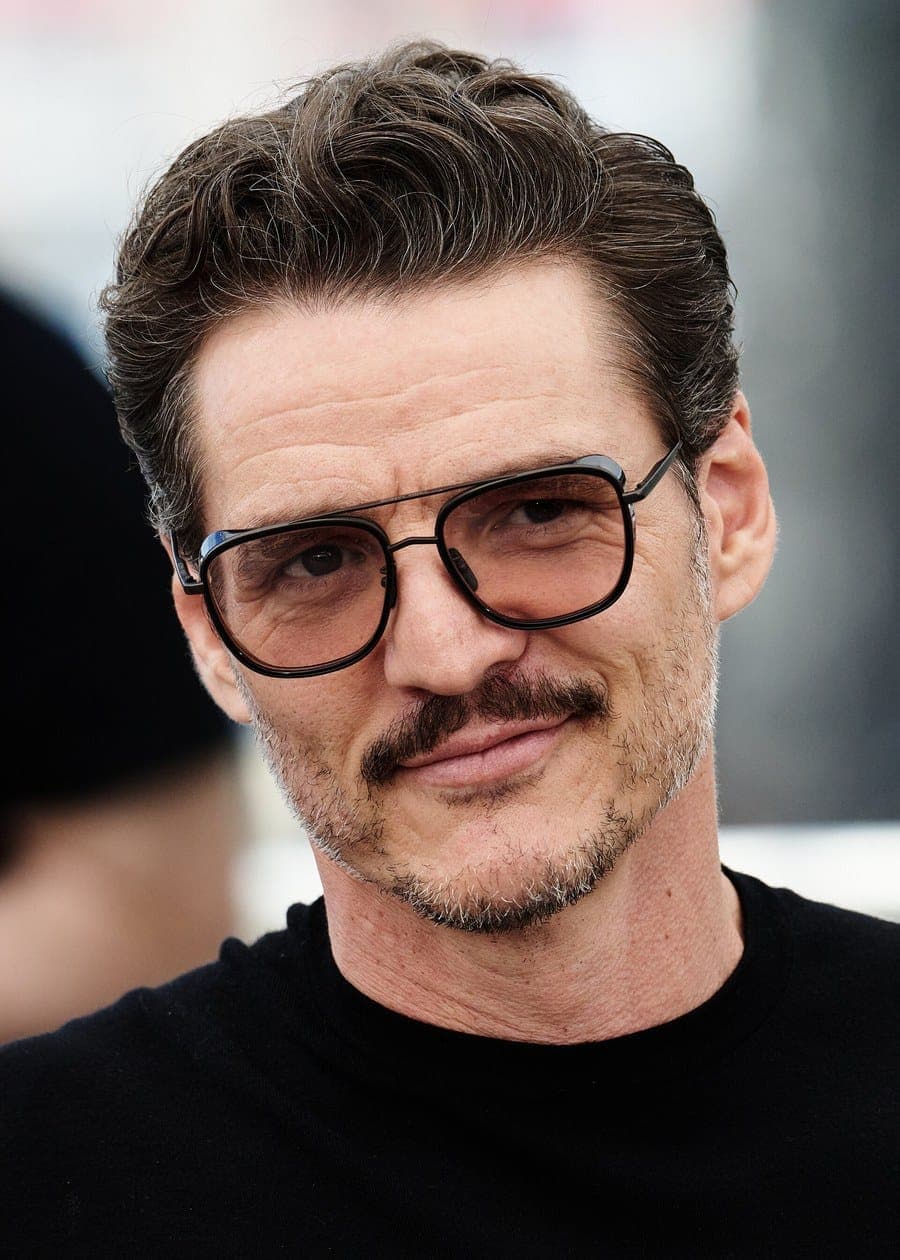
Cannes 2025 cycle · Gabriel Hutchinson
European carpet flash — soft smile eras vs hard jaw silhouette literacy.
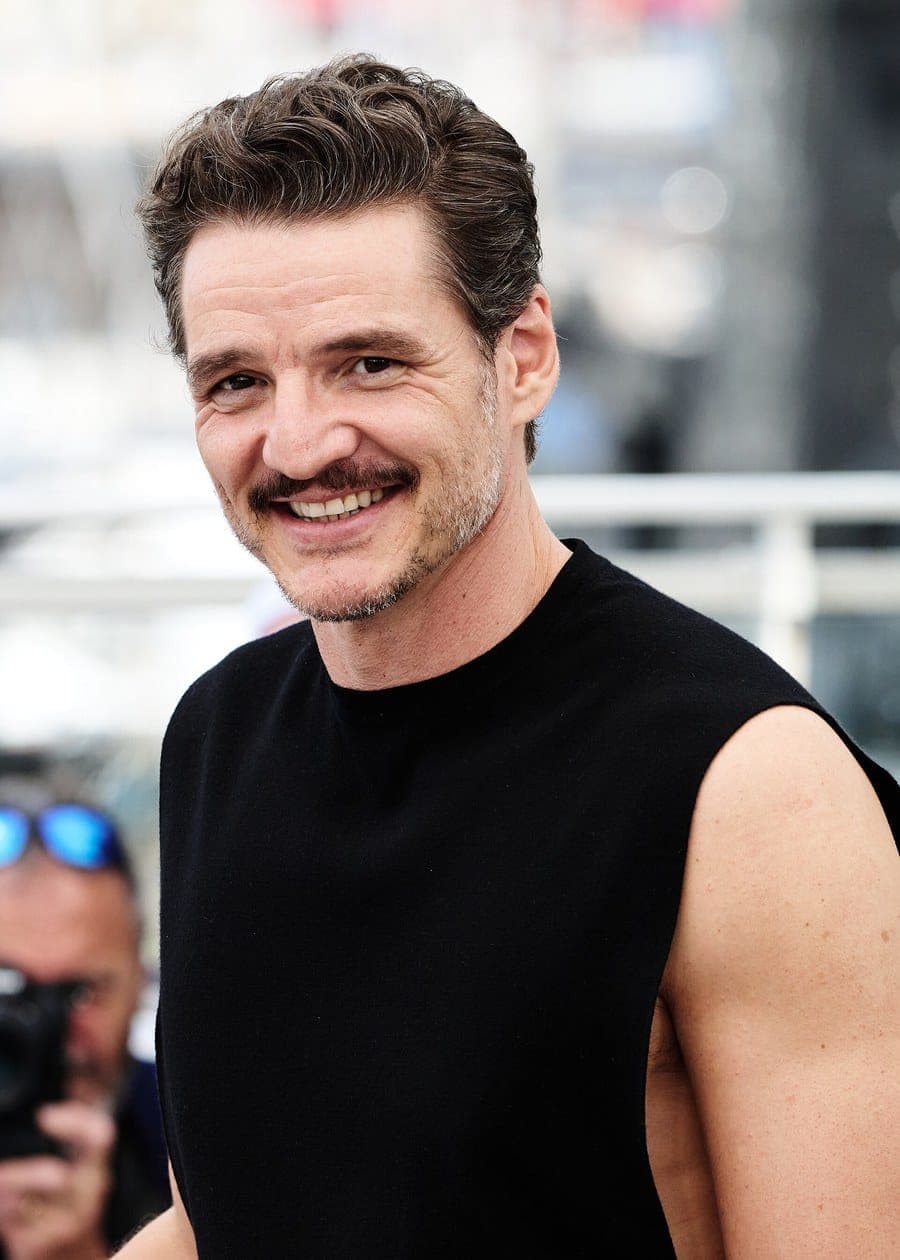
Cannes 2025 stress test · Gabriel Hutchinson
Wider glam — check which planes survive when the shot is not a beauty macro.

Star Wars Celebration Japan · Sara Komatsu
Mando-era panel framing — compare to AI headshot baseline under controlled rims.
Scoreboard
Key looksmaxxing metrics
Hover each gauge for the study note. Compare patterns — a single number is not destiny.
Skin / glow
warm disciplined
High-plane control
Glow on peaks, matte valleys — warm medium-tan undertones; avoid gray ash contour that kills Latino vitality.
Midface ratio
compact-warm
Close-up hold
Compact warm midface holds Narcos grit and Last of Us intimacy without hollow-cheek cosplay that fights Latino undertones.
Lip ratio
full soft-smile
Charisma read
Full balanced lips billboard the soft smile that made him a mainstream Latino leading-man meme — expression leads when eyes and midface hold.
Hair framing
salt-pepper wave control
Temple billboard
Short wavy dark hair with gray is the control lever for temple fifths and jaw edge; longer soft crowns trade mandibular read for volume.
Cheekbone plane
warm high plane
Highlight rail
Warm zygoma takes a clean specular under 45° key — medium-tan Latino undertones punish gray ash hollows.
Jaw ratio
soft-strong taper
Approachable edge
Soft-strong mandibular taper — salt-and-pepper stubble sharpens the silhouette without inventing square Marvel corners.
Proportion lab
Facial thirds & fifths
Two foundational maps. Click landmarks or ticks. Toggle ideal bands on thirds.
Facial thirds
Facial fifths
Width & midface
fWHR and midface ratio
Width-to-height and midface compactness often explain why a face holds in close-up.
fWHR
Midface ratio
Lower third
Jaw ratio & gonial angle
Lower-third geometry is soft-strong taper — measure, do not invent sharper corners with contour.
Jaw ratio
Gonial angle
Periorbital
Canthal tilt & eye spacing
Use the tilt slider; compare to the one-eye-apart spacing heuristic.
Canthal tilt
Eye spacing
Bone planes
Cheekbone plane & orbital rim
Click orbital landmarks. Cheek plane shows where key light should specular.
Cheekbone plane
Orbital rim
Balance
Symmetry mirror & chin projection
Mirror sides to hunt asymmetry. Profile sketch for pogonion projection.
Finish levers
Brow ridge & lip ratio
Styleable levers that change how bone reads without changing bone.
Framing
Hair framing diagram
Salt-and-pepper waves, length, and crown volume change perceived thirds, fifths, and jaw billboard.
Hair framing
Full metric grid
Complete study board
Every tracked metric on this profile — a checklist for rewatching carpets and interviews.
Style history
Look eras that taught the internet
Chapter markers tied to acting eras — enough cultural context to place each lighting grammar.
Game of Thrones
Oberyn Martell breakthrough
Fantasy-TV grit and carpets put Chilean-American leading energy into early looks talk.
Narcos era
Daylight drama grit
Dusty keys + stubble eras stress-test midface warmth without helmet shadow.
Mandalorian peak
Helmet → face reveal literacy
Armor close-ups made soft-smile Latino leading-man structure a mass reference.
Last of Us → Cannes/SXSW
Joel-era soft keys & carpets
Later cycles stress-test whether warmth and taper survive when franchise grades are gone.
Practical literacy
What actually reads on camera
Camera craft first — supplements and surgery discourse second.
Warm midface over ash hollows
9.3Close-ups win with compact warm midface — gray ash hollows fight medium-tan Latino undertones.
Try: Warm neutrals, specular on zygoma peaks only.
Soft-smile charisma billboard
9.1Full balanced lips + soft brown gaze read faster than any contour trick.
Try: Train on frontals before trusting graded HBO stills.
Salt-and-pepper temple control
9.2Short wavy gray framing clears temple fifths and softens the jaw edge without burying bone.
Try: If crown volume buries the temples, you are studying hair, not structure.
Phenotype-true glow
9.3High-plane specular with matte valleys survives flash without plastic shine.
Try: Compare SDCC flash to Last of Us soft daylight.
Study drills
How to train your eye on this face
Repeatable drills — no product shilling.
Closed funnel · two doors
Compare yourself to Pedro Pascal
Start a free trial for your elite face rating, or create an account for celebrity looksmaxxing matching — side-by-side maps, locked metric tables, and the detailed analysis format used on this page.
References
Sources & further reading
Editorial study ratings are educational, not clinical. Where a claim is estimated from public photos rather than measured anthropometry, it is labeled speculative in the analysis above.
1.Wikimedia Commons — Pedro Pascal portraits
Attribution-friendly public stills used for archive/gallery — never as the uniform AI hero.
2.Facial thirds / fifths in beauty education
Classical proportion maps used as teaching overlays, not clinical cephalometry.
3.fWHR & still-photo caveats
Width-to-height from press stills is approximate; lens and yaw dominate.
4.Key light / specular mapping
45° key studies for zygomatic highlight rails in beauty and red-carpet photography.
5.imaxlooks educational framing
Scores are editorial study ratings for camera craft — not medical advice.