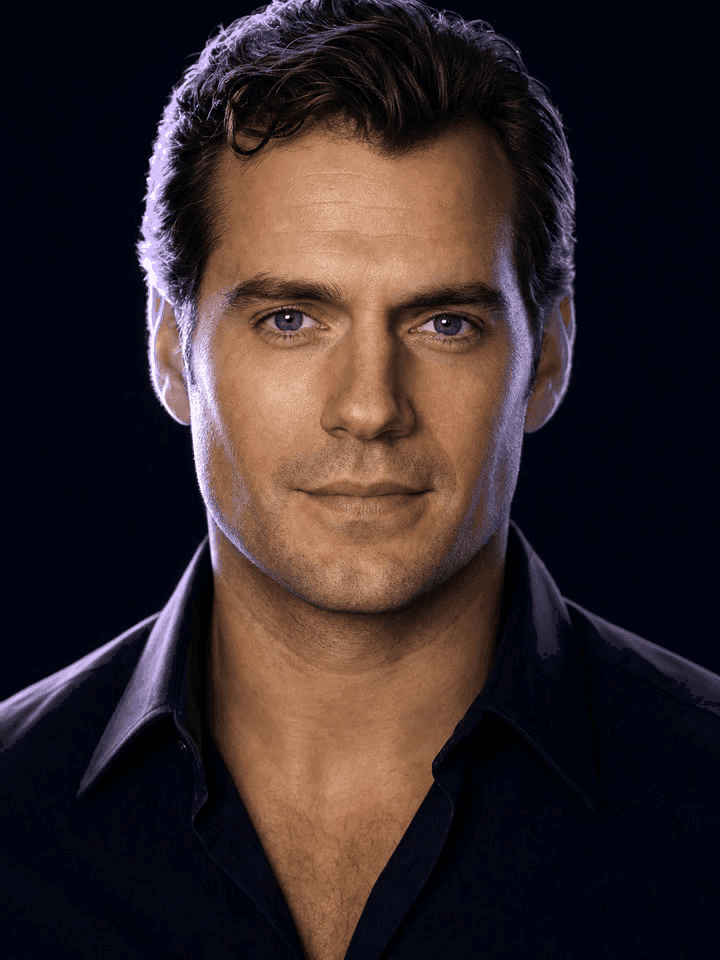
 imaxlooksAI headshot still · imaxlooks actor library
Landmark inspector
L cheek
Zygomatic highlight
Superhero era · Classic square
Henry Cavill
Textbook square gonial angle, dense midface, and short-side haircuts that billboard the mandible.
- Study score
- 93.0
- Signature
- Gonion
- Era
- Superhero
Overall study score 93.0 · ~P97 among editorial demo callouts. Educational only — not clinical. 14 analysis stills loaded.
Body scan · estimated
Skeleton & 3D build preview
Interactive silhouette shaped by researched height, weight, and somatotype (Mesomorph). Drag across the stage to orbit. Toggle mesh vs skeleton — educational estimate only, not a clinical scan.
- Height
- 6′1″ · 185 cm
- Weight
- ~201 lb · 91 kg
- Body type
- Mesomorph
Implied BMI ~26.6 (rough, from public figures) · height scale 106% vs 175 cm baseline
Neon face lab
Real photos · SVG overlays on the face
Wikimedia and archive stills with thirds, fifths, canthal tilt, fWHR, jaw, and midface-to-brow lines drawn on the face. Switch photos below — this is analysis, not a collage gallery.
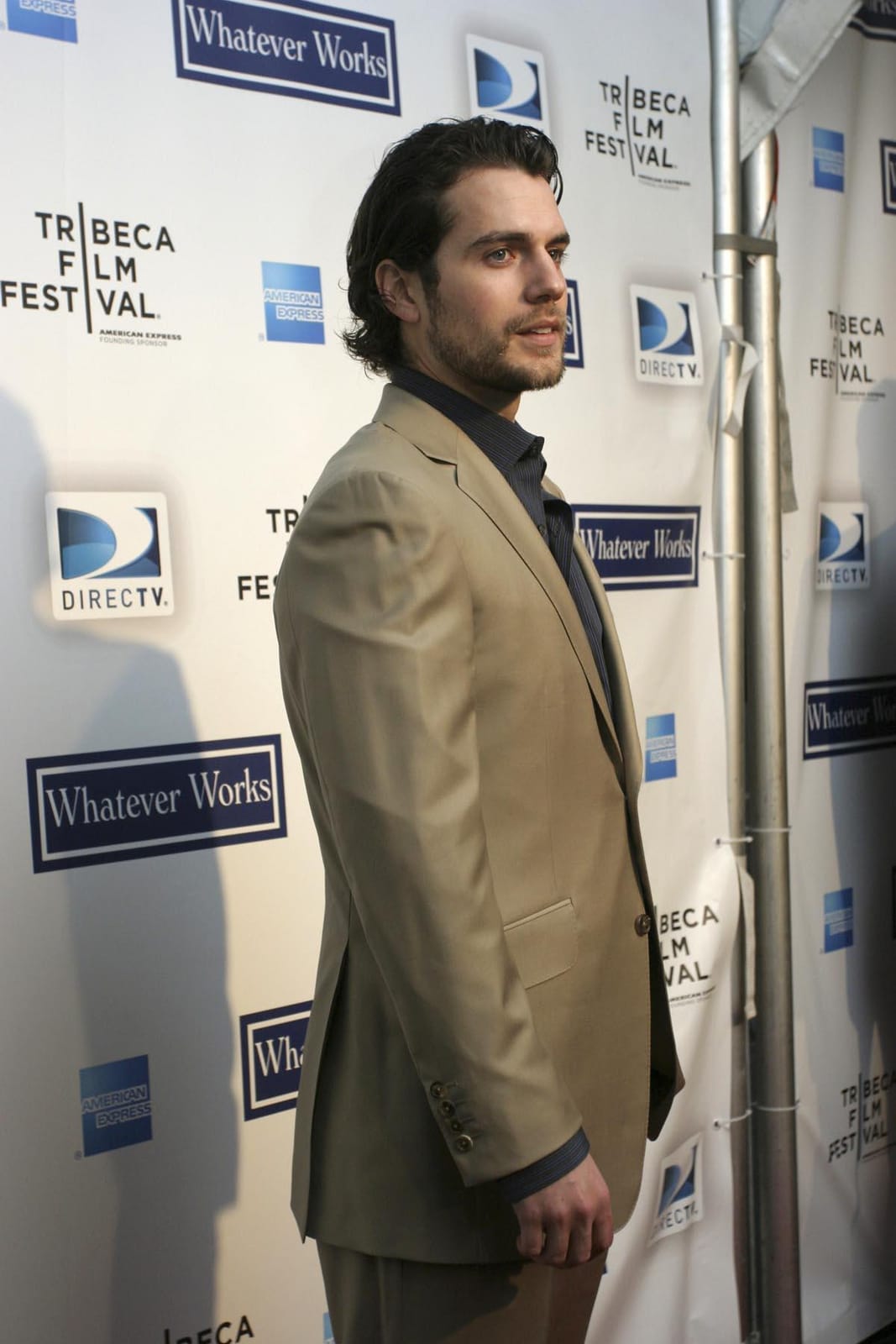
Wikimedia · live overlay
Facial thirds20/37/43%
Relative height of upper / mid / lower thirds (hairline→brow→nose→chin).
Extra archive frames with different overlay defaults — unlock to scrub every still.
Background
Why Henry became a looks reference
Henry Cavill’s Superman-to-Witcher arc is a textbook wide-face, high-fWHR, strong brow-ridge presentation under Hollywood keys. The jaw billboard and supraorbital presence do heavy lifting; facial hair eras (Geralt) redistribute attention but rarely erase mandibular width.
Grooming: clean-shaven maximizes gonial corner readability; beard can thicken the lower third optically. Hair length softens cranial contour and can reduce perceived brow dominance.
Fitness and bulk commentary is inseparable from neck and trapezius mass in photos — those change jacket lines and chin-neck angles. Face literacy still starts at bizygomatic vs bigonial relationships.
Interview close-ups show how dense upper-face massing holds under hard light without needing hollows like thinner phenotypes. Different phenotype, different playbook.
Speculative still analysis on this page labels estimated canthal and midface values. Lens distortion on red carpets is a real confound.
Style: open-collar shirts and tactical costumes both exploit neck width; turtlenecks change the game — useful negative examples.
Scoreboard
Key looksmaxxing metrics
Hover each gauge for the study note. Compare patterns — a single number is not destiny.
Cheekbone plane
supportive
Width
Zygoma supports width; jaw still wins the headline.
Jaw ratio
square bigonial
Signature
Jaw ratio is the meme metric — square without needing extreme photoshop language.
Midface ratio
dense
Thick mid
Dense midface prevents the square jaw from looking bottom-heavy alone.
Symmetry
high
Statue
High symmetry sells the carved metaphor in stills.
fWHR
high
Square
High estimated fWHR — wide bizygomatic with strong mandibular follow-through.
Skin / glow
matte-hero
On-set
Often matte/hero finish rather than beauty-glow.
Proportion lab
Facial thirds & fifths
Two foundational maps. Click landmarks or ticks. Toggle ideal bands on thirds.
Facial thirds
Facial fifths
Width & midface
fWHR and midface ratio
Width-to-height and midface compactness often explain why a face holds in close-up.
fWHR
Midface ratio
Lower third
Jaw ratio & gonial angle
For this face, mandibular geometry is a primary billboard.
Jaw ratio
Gonial angle
Periorbital
Canthal tilt & eye spacing
Use the tilt slider; compare to the one-eye-apart spacing heuristic.
Canthal tilt
Eye spacing
Bone planes
Cheekbone plane & orbital rim
Click orbital landmarks. Cheek plane shows where key light should specular.
Cheekbone plane
Orbital rim
Balance
Symmetry mirror & chin projection
Mirror sides to hunt asymmetry. Profile sketch for pogonion projection.
Finish levers
Brow ridge & lip ratio
Styleable levers that change how bone reads without changing bone.
Framing
Hair framing diagram
Crown volume and temple reveal change perceived thirds and fifths.
Hair framing
Full metric grid
Complete study board
Every tracked metric on this profile — a checklist for rewatching carpets and interviews.
Style history
Look eras that taught the internet
Short chapter markers — not a full filmography.
Superman era
Wide-face billboard
Cape-key lighting loves brow ridge and mandibular width.
Mission etc.
Clean-shaven sharpness
Gonion corners read clearly without beard fill.
Witcher
Beard & hair mass
Costume grooming redistributes attention across thirds.
Fitness press
Neck column
Traps and neck change jacket and chin-neck photographs.
Candids
fWHR context
Daylight stills for speculative width-to-height study.
Carpets & candids
Red carpet vs paparazzi truth
Studio portraits and premiere lighting are designed to flatter planes. Paparazzi daylight is the stress test: overhead sun, mixed color temperature, unplanned angles, and lenses that were never chosen for facial honesty.
Henry's bone cues that survive bad light are the ones worth studying. Soft-tissue finish and hair can hide flaws in a controlled key; they cannot invent zygoma or gonial geometry that is not there.
When you compare a candid to a lookbook still, ask: did the metric change, or did the light? That question separates fashion vibes from structure literacy.
Flash on the carpet compresses shadows and can fake “definition” that noon sun deletes. If a hollow or jaw corner only exists under flash, it was a lighting artifact — not a new mandible.
Appearance and fitness commentary in tabloids usually skips lens length and key angle. Your job as a student of looks is to hold those variables constant before you believe a glow-up narrative.
Deep breakdown
Feature-by-feature notes
Short cards — breathe between ideas.
Voice
What they have said (and what they have not)
Press cycles emphasize training and armor/costume weight more than cheek diagrams. Paraphrase from fitness features: physique serves silhouette, and silhouette frames the face.
He has joked about mustaches and Witcher hair — grooming as character. Treat as style levers.
References hold citations; scores are editorial.
Study drills
Techniques to try (observation & styling)
Non-medical drills you can practice with a mirror, a lamp, and patience.
Takeaway
The one-sentence thesis
Textbook square gonial angle, dense midface, and short-side haircuts that billboard the mandible.
Re-read the diagrams with that sentence in mind. If a chart does not support the thesis, question the chart — or refine the thesis. Literacy beats idol worship.
Next: scroll related news from the Celebrity to NewsItem Postgres link, then use References at the bottom for source trails.
Closed funnel · two doors
Compare yourself to Henry Cavill
Start a free trial for your elite face rating, or create an account for celebrity looksmaxxing matching — side-by-side maps, locked metric tables, and the detailed analysis format used on this page.
Related news
From the imaxlooks feed
Henry Cavill’s square-jaw playbook: why the Superman mandible still dominates stills
Even without a fresh 2026 couture cycle dominating headlines, Cavill remains the reference sheet for dense midface, squared chin projection, and low hairstyle interference — a looksmaxxing case study.
Henry Cavill: looks-maxxing breakdown
Elite face rating of Henry Cavill’s textbook masculine bone stack — square gonial angle, strong chin projection, prominent brow ridge, and short-side hair that reveals temporal width for Superman-scale looks-maxxing.
References
Sources & further reading
Editorial study ratings are educational, not clinical. Where a claim is estimated from public photos rather than measured anthropometry, it is labeled speculative in the analysis above.
1.Public Superman / Witcher press stills (studio publicity)
Primary visual corpus for jaw/hair silhouette study.
2.Fitness/grooming press around Man of Steel / Witcher eras
Body composition changes co-star with facial leanness — correlational, not causal proof.
3.imaxlooks editorial photo study
Gonial/fWHR figures are educational estimates from stills.
4.Speculative ratios
fWHR, midface, canthal, and gonial figures on this page are educational estimates from public stills — not clinical measurements.