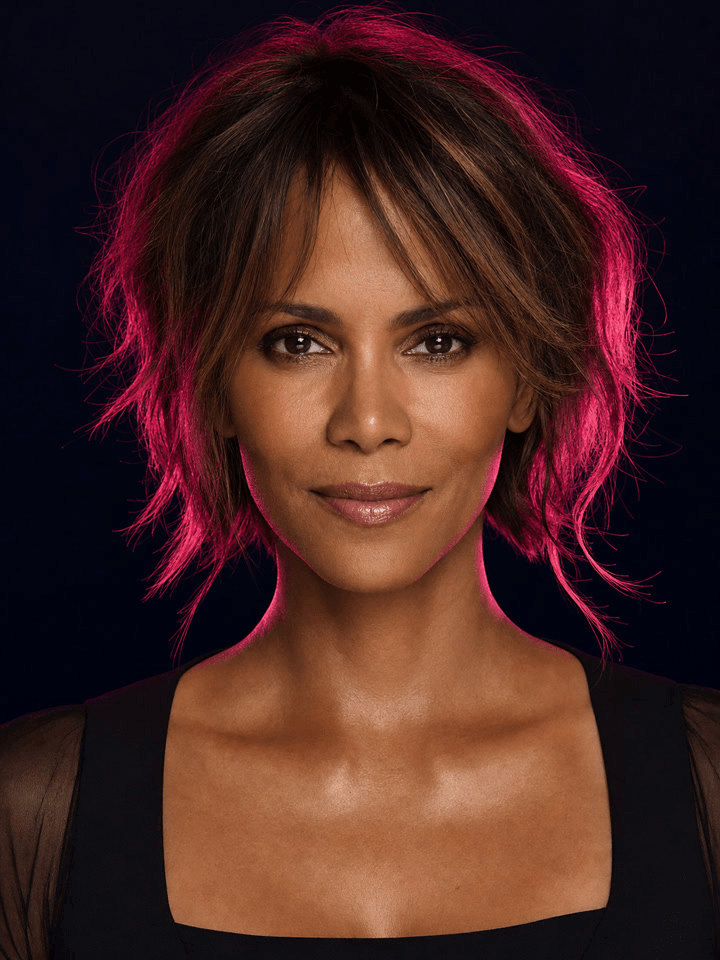
 imaxlooksAI headshot still · imaxlooks actor library
Landmark inspector
L cheek
Zygomatic highlight
Monster's Ball → Bond / Storm → Bruised peak · Luminous Oscar-era cheekbone glamour
Halle Berry
Luminous deep-to-medium brown skin, high cheekbones, defined jaw, and soft-smile athletic polish that made Monster's Ball, Die Another Day, and X-Men's Storm a mainstream Black looks lab.
- Study score
- 93.2
- Signature
- Cheek + glow
- Era
- Oscar / Bond
Overall study score 93.2 · ~P97 among editorial demo callouts. Educational only — not clinical. 2 analysis stills loaded.
Body scan · estimated
Skeleton & 3D build preview
Interactive silhouette shaped by researched height, weight, and somatotype (Ecto–mesomorph). Drag across the stage to orbit. Toggle mesh vs skeleton — educational estimate only, not a clinical scan.
- Height
- 5′5″ · 165 cm
- Weight
- ~123 lb · 56 kg
- Body type
- Ecto–mesomorph
Implied BMI ~20.6 (rough, from public figures) · height scale 94% vs 175 cm baseline
Neon face lab
Real photos · SVG overlays on the face
Wikimedia and archive stills with thirds, fifths, canthal tilt, fWHR, jaw, and midface-to-brow lines drawn on the face. Switch photos below — this is analysis, not a collage gallery.
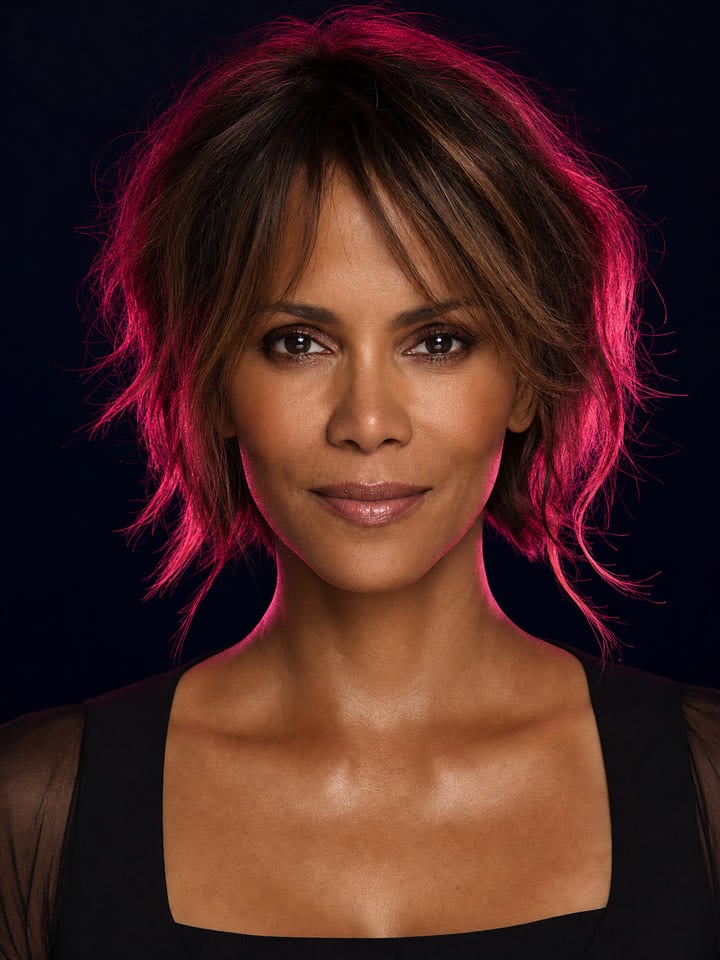
Portrait · live overlay
Facial thirds19/39/41%
Relative height of upper / mid / lower thirds (hairline→brow→nose→chin).
Extra archive frames with different overlay defaults — unlock to scrub every still.
Actor · Cleveland → Miss USA / Miss World → Oscar / Bond / Storm
Who Halle Berry is — and why luminous Oscar-era cheekbone glamour became a Black looks lab
Halle Berry is an American actress whose path runs from Cleveland modeling and the Miss USA / Miss World circuit into prestige drama (Monster's Ball — Academy Award), franchise spectacle (Die Another Day's Bond girl; X-Men's Storm), and later athletic directorial work (Bruised). That arc put luminous deep-to-medium brown skin, high cheekbones, a defined soft jaw, and athletic meso-ectomorph framing into mainstream Black looks discourse.
Occupation context matters. She is not a runway-only model: Oscar intimacy (Monster's Ball), Bond beauty macros, Marvel/mutant carpet keys (Storm), Catwoman-era physicality, and Bruised fight-training stills each teach different light grammars. Separate costume metallics, franchise grades, and carpet flash from bone that survives a frontal still without the grade.
Cultural commentary: first African American woman to win Best Actress (Monster's Ball), Bond girl visibility, and Storm carpets made “luminous cheek plane / soft-smile athletic taper / magenta race accents” a mass meme category in Black looks forums. Translate hype into cues — high zygomatic shelves, compact midface, defined soft jaw, phenotype-true warm undertones — instead of ash contour that fights her glow thesis.
Hair eras are the control lever: Oscars-adjacent short crops and pixies expose cranial shape and fifths with unusual honesty; longer waves reframe outer fifths. Track one metric (cheekbone plane or soft-smile lip read) across 1997 press → Oscar → Bond → Cannes 2025 cycles.
For Black phenotype literacy: warm deep-to-medium undertones, magenta/pink race accents on this page match the edition guide (#ff2d95 / #ff5aad), keep specular on high planes, and feed BodyScanLab with researched athletic meso-ectomorph inputs (~5′5″ / ~56 kg estimated) — study inputs, not clinical measures.
Press & public stills
Pictures of the work — eras that taught the internet
Licensed Wikimedia Commons stills of Halle Berry's public eras (not the uniform AI hero headshot). Use these to study costume vs bone, then flip back to the AI headshot for a controlled magenta/pink race-rim baseline.
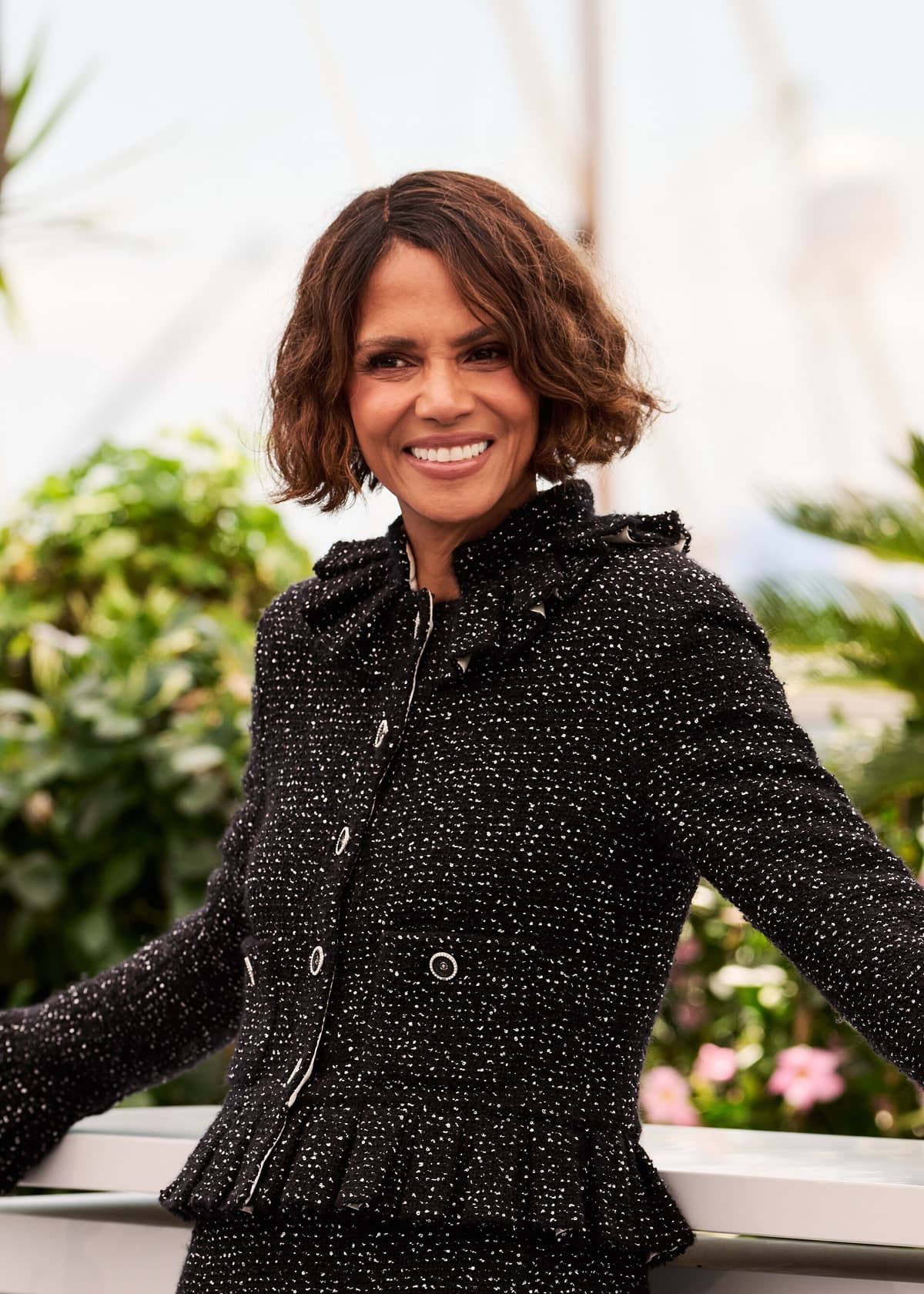
Cannes Film Festival · 2025
Cannes frontal — luminous skin, high cheekbones, soft smile under festival key.

Cannes Film Festival cropped · 2025
Cropped Cannes frontal — cheek plane and hazel-eye spacing vs AI headshot.
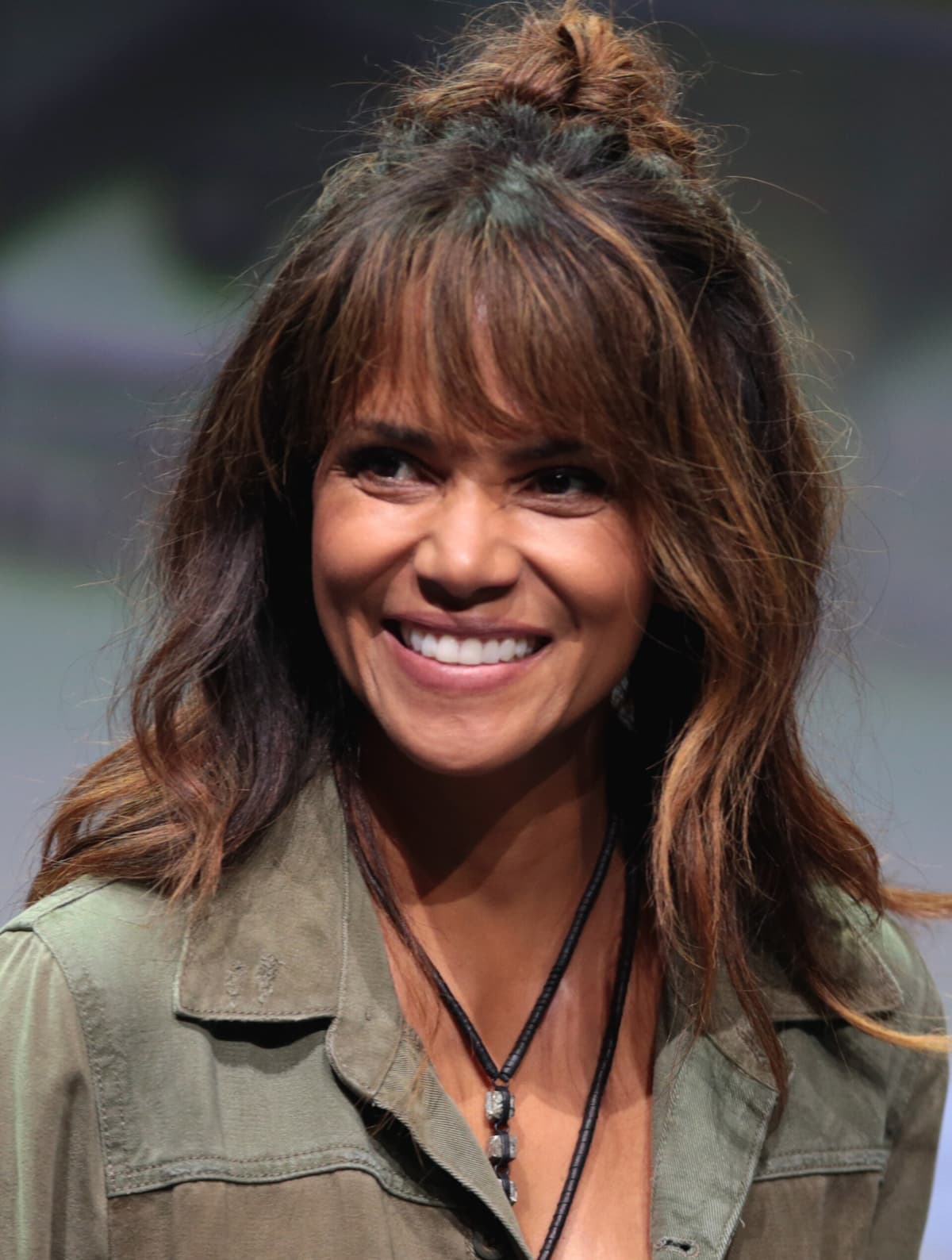
Comic-Con / convention circuit · Gage Skidmore
Convention hard light — defined jaw and zygoma shelf without carpet jewelry steal.
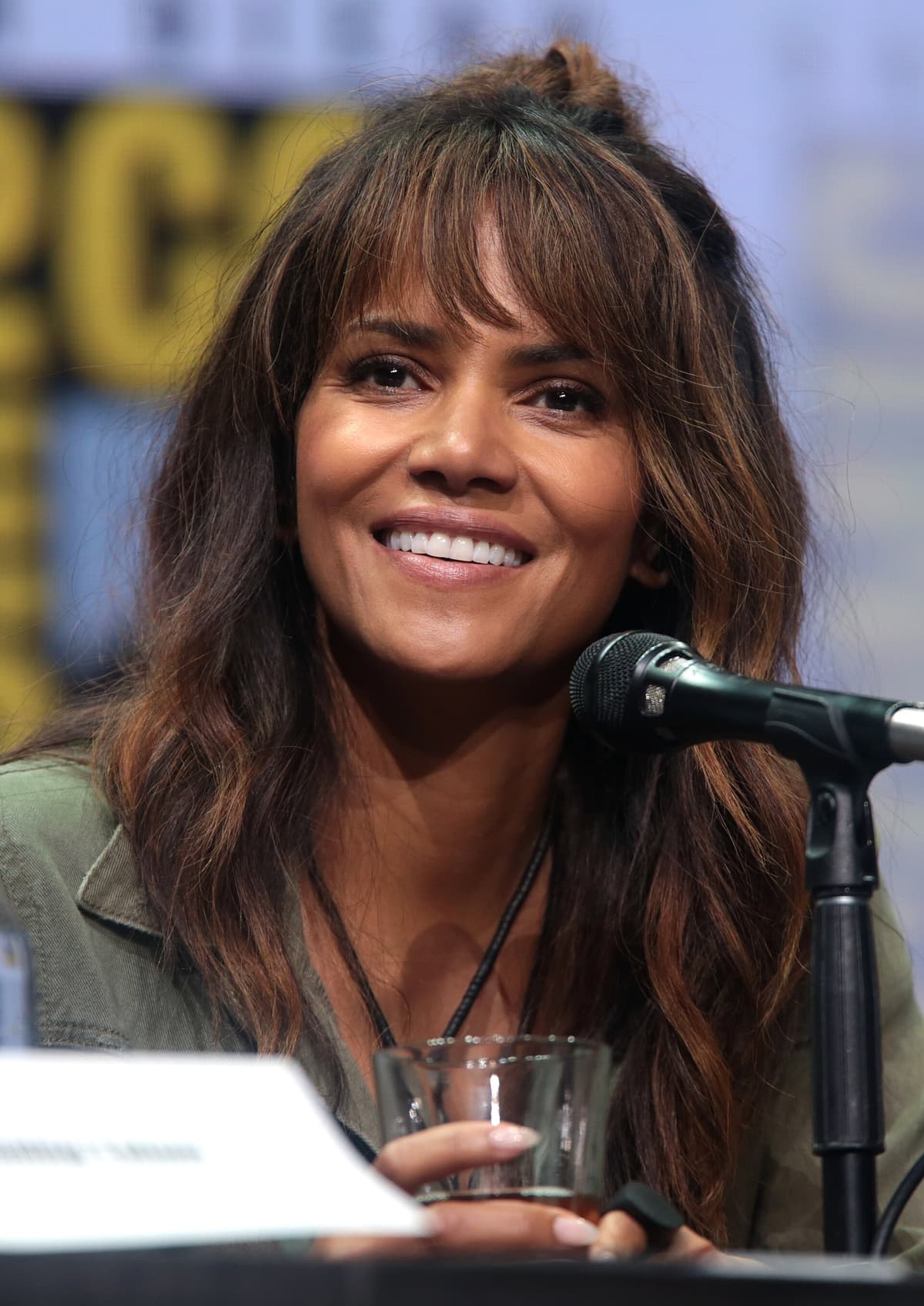
Convention three-quarter · Gage Skidmore
3/4 press — mandibular taper and temple fifths under mixed keys.

Press portrait · Commons
Clean public portrait — soft-smile billboard and high-plane glow.
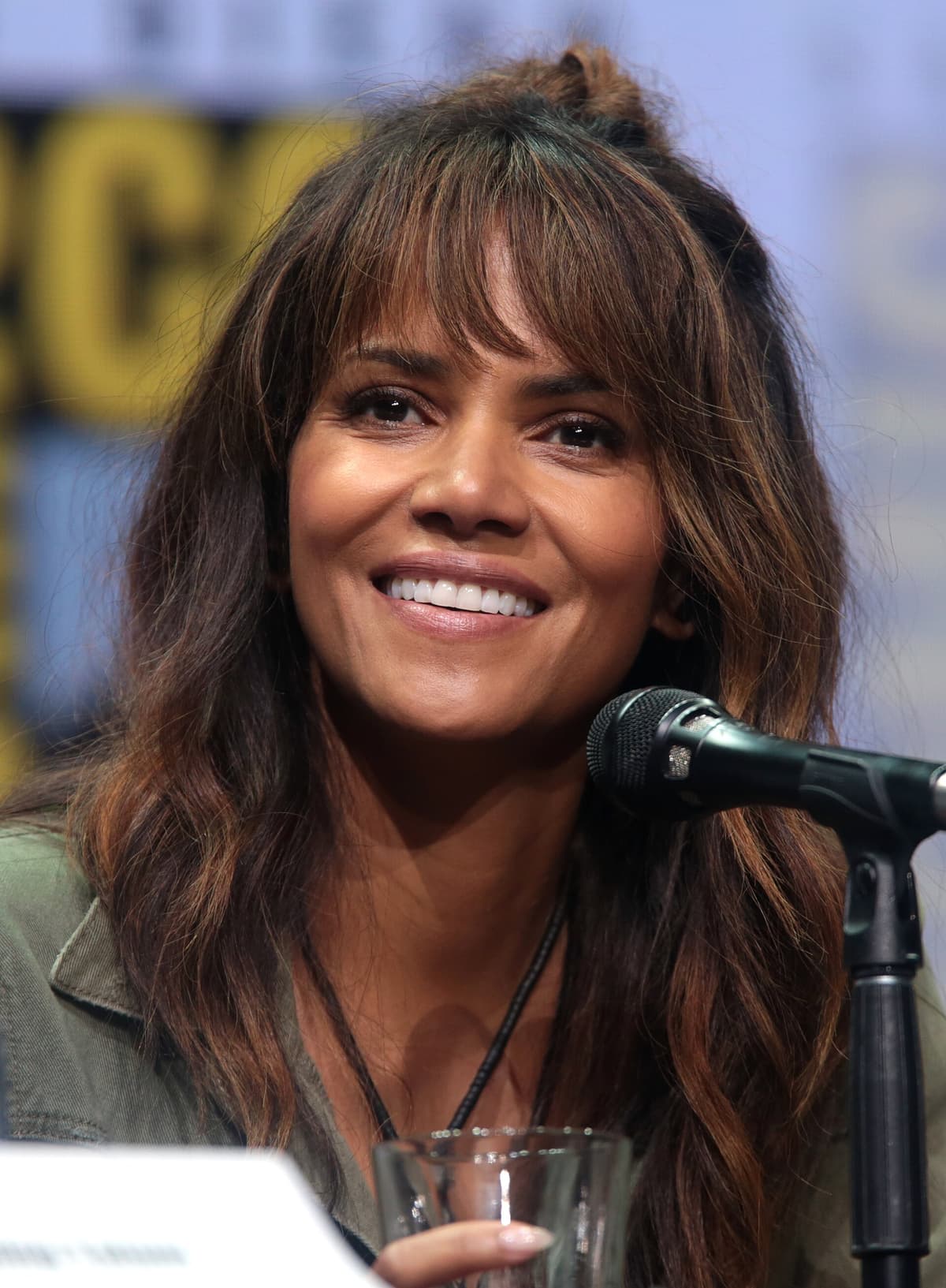
Gage Skidmore portrait · Commons
Alternate convention crop — canthal/eye-spacing read without gown clutter.
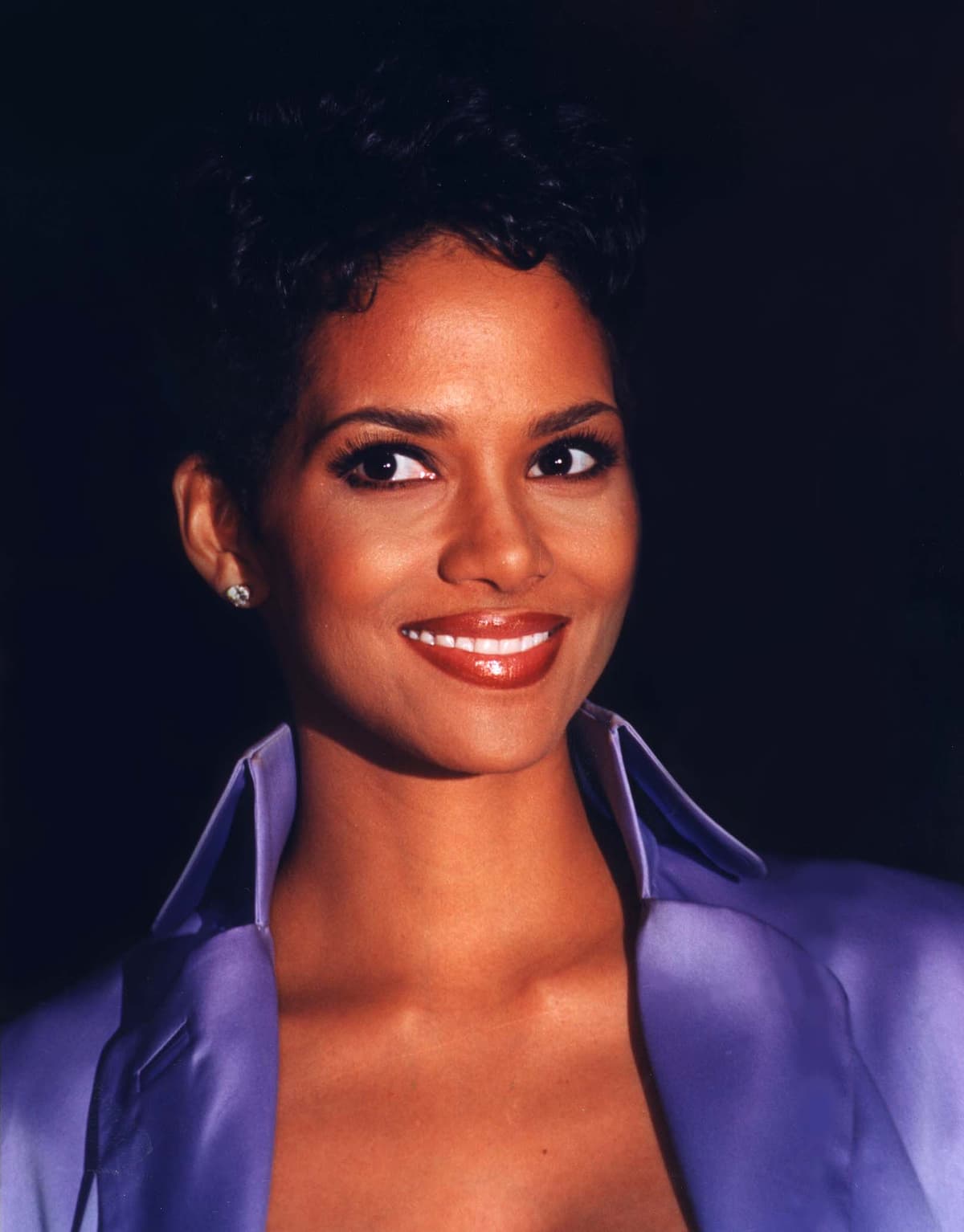
1997 era portrait · 1997
90s press baseline — early career bone read before Oscar/Bond peak polish.
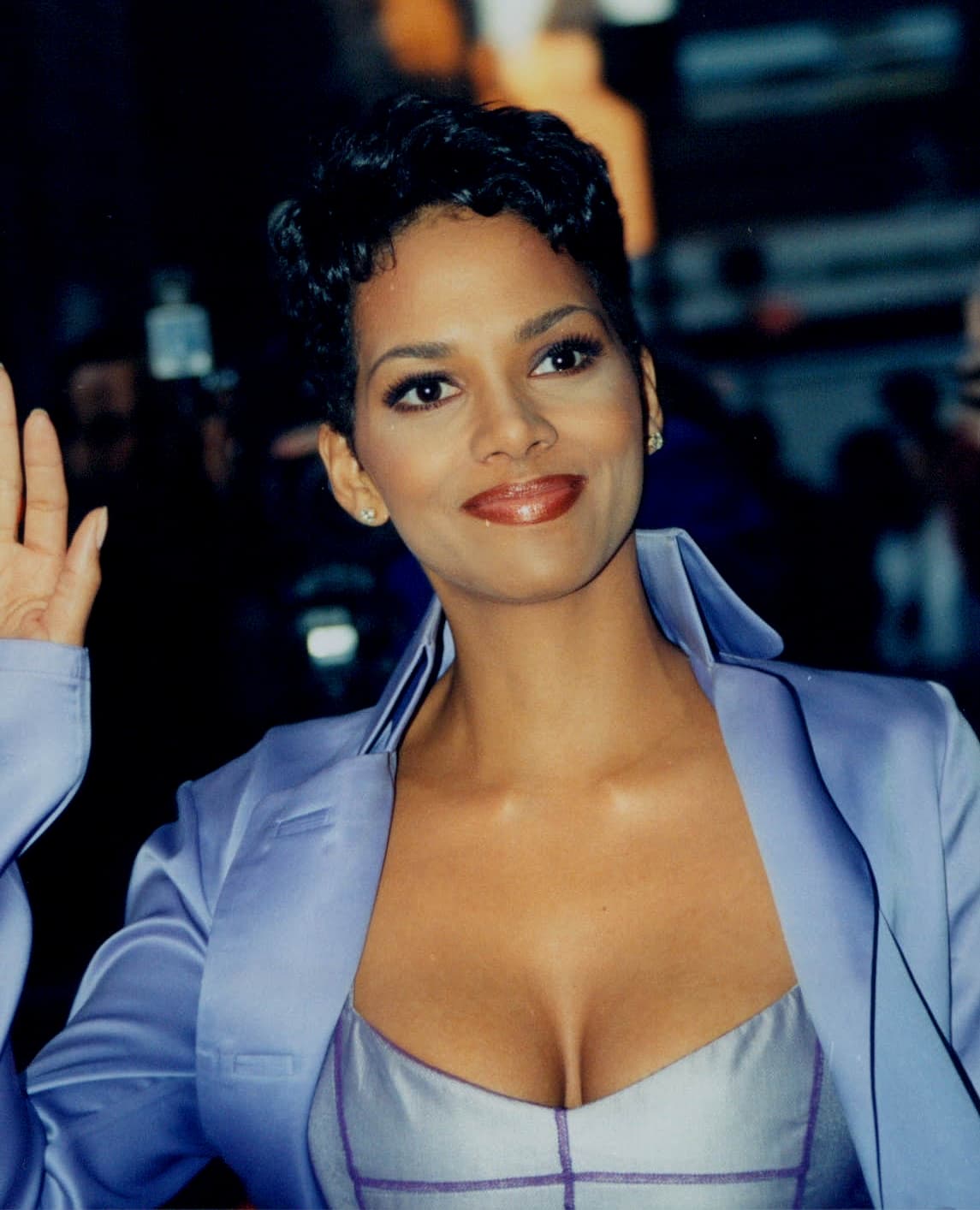
Essence Awards · Commons
Awards-circuit still — contrast thesis on warm deep undertones under stage flash.
Scoreboard
Key looksmaxxing metrics
Hover each gauge for the study note. Compare patterns — a single number is not destiny.
Cheekbone plane
high luminous plane
Signature
High zygomatic shelf is the architectural headline — Oscar, Bond, and Storm carpets all teach cheek specular as the brand thesis.
Skin / glow
luminous disciplined
High-plane polish
Glow on peaks, matte valleys — warm deep-to-medium undertones; polish reads as disciplined high-plane control, not filter cosplay.
Lip ratio
full soft-smile
Charisma read
Full balanced lips billboard the soft smile and Oscar-to-Bond polish that made her a mainstream Black looks reference.
Midface ratio
compact luminous
Close-up hold
Compact luminous midface holds Monster's Ball soft daylight and Bond beauty macros without hollow-cheek cosplay that fights warm deep-to-medium undertones.
Symmetry
high
Precise
High symmetry lets bold lip and metallic lids land as design, not correction, across Oscar and Bond eras.
Jaw ratio
defined soft taper
Athletic edge
Defined soft mandibular taper — athletic leading-woman silhouette that survives short-hair eras and Bond carpets without contour invention.
Proportion lab
Facial thirds & fifths
Two foundational maps. Click landmarks or ticks. Toggle ideal bands on thirds.
Facial thirds
Facial fifths
Width & midface
fWHR and midface ratio
Width-to-height and midface compactness often explain why a face holds in close-up.
fWHR
Midface ratio
Lower third
Jaw ratio & gonial angle
Lower-third geometry is defined soft athletic taper — measure, do not invent sharper corners with contour.
Jaw ratio
Gonial angle
Periorbital
Canthal tilt & eye spacing
Use the tilt slider; compare to the one-eye-apart spacing heuristic.
Canthal tilt
Eye spacing
Bone planes
Cheekbone plane & orbital rim
Click orbital landmarks. Cheek plane shows where key light should specular.
Cheekbone plane
Orbital rim
Balance
Symmetry mirror & chin projection
Mirror sides to hunt asymmetry. Profile sketch for pogonion projection.
Finish levers
Brow ridge & lip ratio
Styleable levers that change how bone reads without changing bone.
Framing
Hair framing diagram
Crown volume and temple reveal change perceived thirds and fifths.
Hair framing
Full metric grid
Complete study board
Every tracked metric on this profile — a checklist for rewatching carpets and interviews.
Style history
Look eras that taught the internet
Short chapter markers — not a full filmography.
1990s
Pageant-to-press classroom
Miss USA / early Hollywood press teaches cheek plane honesty.
2002
Oscar luminous thesis
Monster's Ball era — global audience learns glow + zygoma on a Best Actress carpet.
Bond / Storm
Franchise competition
Die Another Day and X-Men carpets — costume specular vs cheek specular.
Hair journeys
Pixie vs wave
Short crops expose fifths; longer waves reframe outer units.
Bruised / 2020s
Athletic second act
Fight-training and Cannes stills reaffirm meso-ectomorph carpet frame.
Carpets & candids
Red carpet vs paparazzi truth
Studio portraits and premiere lighting are designed to flatter planes. Paparazzi daylight is the stress test: overhead sun, mixed color temperature, unplanned angles, and lenses that were never chosen for facial honesty.
Halle's bone cues that survive bad light are the ones worth studying. Soft-tissue finish and hair can hide flaws in a controlled key; they cannot invent zygoma or gonial geometry that is not there.
When you compare a candid to a lookbook still, ask: did the metric change, or did the light? That question separates fashion vibes from structure literacy.
Flash on the carpet compresses shadows and can fake “definition” that noon sun deletes. If a hollow or jaw corner only exists under flash, it was a lighting artifact — not a new mandible.
Appearance and fitness commentary in tabloids usually skips lens length and key angle. Your job as a student of looks is to hold those variables constant before you believe a glow-up narrative.
Deep breakdown
Feature-by-feature notes
Short cards — breathe between ideas.
Voice
What they have said (and what they have not)
She has spoken extensively about aging, menopause fitness, and representation; paraphrase: athletic training and phenotype-true glow change which cues students of aesthetics even see past forty and fifty.
Hair journeys — pixie, short textured, long wave — are documented in fashion press; use them as framing-lever case studies.
No clinical measurements here; speculative overlays labeled. References below.
Study drills
Techniques to try (observation & styling)
Non-medical drills you can practice with a mirror, a lamp, and patience.
Takeaway
The one-sentence thesis
Luminous deep-to-medium brown skin, high cheekbones, defined jaw, and soft-smile athletic polish that made Monster's Ball, Die Another Day, and X-Men's Storm a mainstream Black looks lab.
Re-read the diagrams with that sentence in mind. If a chart does not support the thesis, question the chart — or refine the thesis. Literacy beats idol worship.
Next: scroll related news from the Celebrity to NewsItem Postgres link, then use References at the bottom for source trails.
Closed funnel · two doors
Compare yourself to Halle Berry
Start a free trial for your elite face rating, or create an account for celebrity looksmaxxing matching — side-by-side maps, locked metric tables, and the detailed analysis format used on this page.
References
Sources & further reading
Editorial study ratings are educational, not clinical. Where a claim is estimated from public photos rather than measured anthropometry, it is labeled speculative in the analysis above.
1.Academy Awards — Monster's Ball Best Actress
Career context and Oscar landmark.
2.Public height/weight listings (study inputs)
Commonly cited ~5′5″ (165–166 cm); weight ~121–125 lb / ~55–57 kg estimated — BodyScanLab study inputs only.
3.imaxlooks editorial photo study
Educational metric estimates from public stills.
4.Speculative ratios
fWHR, midface, canthal, and gonial figures on this page are educational estimates from public stills — not clinical measurements.